About RCA
Regional cooperation through peaceful applications of nuclear science and technology
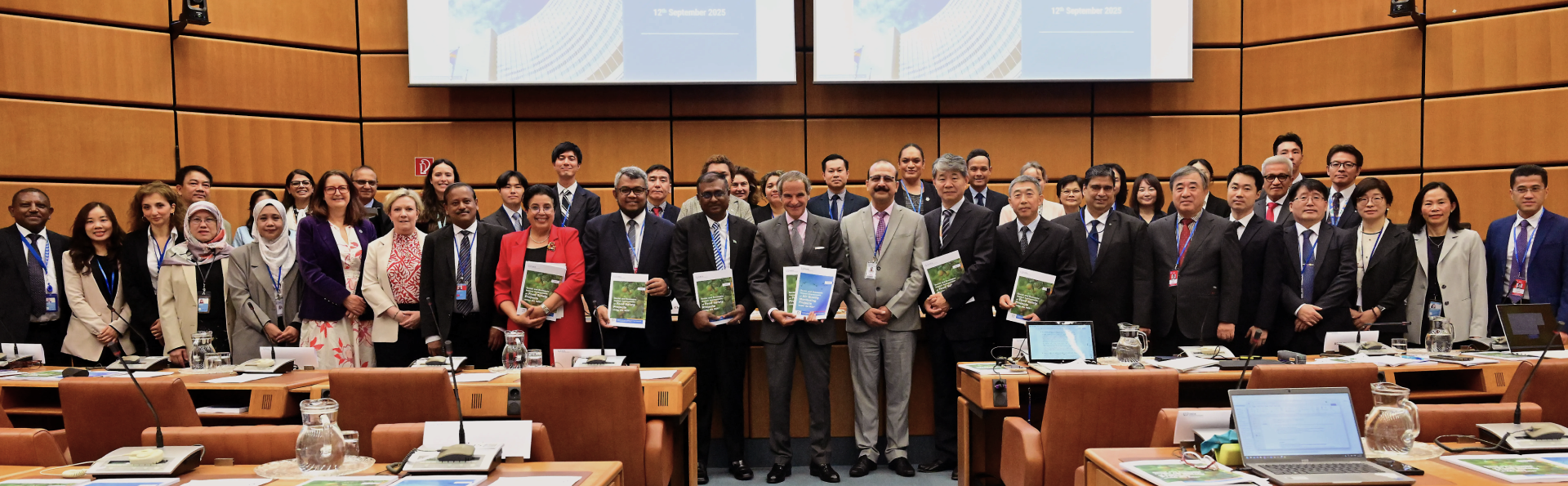
The Regional Cooperative Agreement (RCA) is an intergovernmental framework established under the aegis of the International Atomic Energy Agency (IAEA) for promoting cooperative research, development, and training related to nuclear science and technology in Asia and the Pacific. The programme supports peaceful applications of nuclear technology across sectors including healthcare, agriculture, industry, environment, radiation safety, and energy planning.
Evolution & Growth
RCA traces its origins to an IAEA conference held at Bhabha Atomic Research Centre (BARC), Mumbai in 1964. During the conference, Dr. Raja Ramanna and Dr. P.K. Iyengar proposed a cooperative research initiative involving countries of the region under the aegis of the IAEA. This initiative evolved into a tri-partite agreement involving India, the Philippines, and the IAEA, leading eventually to the establishment of RCA in 1971. The Agreement entered into force on 22 June 1972.
Initially formed with two founding member countries, India and Vietnam, RCA has expanded into a major regional cooperation platform comprising 22 Government Parties across Asia and the Pacific. The RCA Amendment adopted in 2017 made the Agreement perpetual, strengthening its long-term institutional continuity.
RCA Structure
RCA activities are coordinated by the International Atomic Energy Agency (IAEA) and the RCA Regional Office (RCARO), South Korea. The RCA framework includes:
- National Representatives Meeting (NRM)
- RCA General Conference Meeting (GCM)
- RCA Committee of Chairs
- RCARO Standing Advisory Committee